
by Vanita Dahia
The Great Australian Thinning – Why your Hair needs Help
If you’ve noticed a few more strands than usual circling the shower drain, you may need to take action now.
Nearly half of all Australian men will experience significant thinning by age 50, and one in four women will deal with it at some stage in their lives.
Whether it’s the harsh Aussie sun, the stress of modern life, or just the genetic hand you were dealt, understanding the why is the first step toward getting your confidence back.
The Science of the Strand – Meet Your Hair Follicle
Think of your hair follicle as a tiny factory located just beneath the skin’s surface. It’s not just a hole, it’s a living organ that cycles through three distinct phases:
- Anagen, the Growth Phase – This last 2–7 years. Your hair is actively growing, and its “factory” is running at 100% capacity.
- Catagen, the Transition Phase – A short 2-week window where the follicle shrinks and detaches from the blood supply.
- Telogen, the Resting Phase – For about 3 months, the hair sits dormant before eventually falling out to make room for a new one.
Why does Hair fall out?
Hair loss happens when this cycle is disrupted. Either the Anagen phase gets shorter, leading to thinner, “miniaturised” hairs, or a shock to the system forces too many hairs into the Telogen phase at once.
Why does Hair Fall Out?
Here re the reasons why the hair cycle gets interupted:
1. Androgenetic alopecia due to Hormonal Imbalances
This is the most common cause of hair loss.
- DHT (Dihydrotestosterone), a byproduct of testosterone attacks the hair follicles leading to male patterned baldness.
- Thyroid dysfunction – Overactive and underactive thyroid can disrupt the hair growth cycle, leading to thinning across the entire scalp.
2. Physical and Emotional Stress
Your body is in a survival mode when you experience a major shock, surgery, or extreme psychological stress, diverting energy away from “non-essential” functions like hair growth. This often leads to Telogen Effluvium, where a large number of hairs enter the shedding phase at once, usually 2–3 months after the stressful event.
3. Nutritional Deficiencies
Hair follicles, skin and nails need constant supply of nutrients as they are the most metabolically active cells. If you are low on the following, your hair is often the first thing to suffer:
- Iron: Essential for oxygenating cells.
- Protein: Hair is primarily made of a protein called keratin.
- Zinc and Biotin: Necessary for the structural integrity of the hair shaft.
4. Scalp Inflammation
Scalp inflammation due to seborrheic dermatitis, psoriasis, or a buildup of environmental pollutants, it can weaken the anchor of the hair, leading to oxidative stress, which damages the DNA of the hair follicle.
5. Medication and Treatments
Some medications like chemotherapy, blood thinners, antidepressants, and cholesterol-lowering drugs lists hair loss as a side effect.
6. Mechanical Damage
Hair breaks off due Heat styling, traction, overuse of straighteners or Chemicals like perms or bleaches
Hair Cycle Disruption
| Cause | Effect on the Cycle | Result |
| Genetics/DHT | Shortens the Anagen (growth) phase | Thinner, shorter hair |
| Stress/Illness | Forces hair into Telogen (resting) phase | Sudden, heavy shedding |
| Poor Nutrition | Weakens the Keratin structure | Brittle hair and breakage |
What are Types of Hair loss?
- Androgenetic Alopecia, most common in male or female pattern baldness, driven by a hormone called DHT that shrinks follicles.
- Telogen Effluvium: Sudden shedding often triggered by high stress, illness, or rapid weight loss.
- Alopecia Areata: An autoimmune condition where the body mistakenly attacks the follicles, causing patchy bald spots.
- Traction Alopecia: Damage caused by tight hairstyles that pull on the root.
What are Conventional Hair Loss Treatments?
- Minoxidil, topical vasodilator that widens blood vessels to “feed” the follicle.
- Finasteride blocks the conversion of testosterone into DHT (the follicle-shrinker).
- New generation immunotherapy like Baricitinib for Alopecia Areata, works by blocking JAK1 and JAK2 pathways that send the “attack” signals.
How can we prevent excess shedding of hair?
Scientific advancements in topical treatments have made it possible to slow down hair loss and even promote hair regrowth. Hair care products with ingredients like peptides, caffeine, saw palmetto, and red clover extract have been shown to support hair follicle health, improving strength and density over time. These active compounds work by stimulating blood circulation, blocking DHT (the hormone linked to hair thinning) and nourishing the scalp with essential nutrients
Step 1: Prolong Growth Phase
In this Anagen phase, we need to encourage nourishment of the follicles, dilation of the blood vessels, increase the supply of nutrient and oxygen rich blood to the follicle, keeping the hair strands anchored here happy and healthy.
Turmeric helps to reduce DHT, the hair loss hormone, while caffeine counteracts the suppressive effects of testosterone on hair growth.
Step 2: Protect Existing Hair
In this Catagen phase, hair follicles start to shrink before finally detaching from the dermal papilla. It is vital to nourish the hair strands and improve anchorage so they don’t break or easily fall out.
Panthenol and tetrapeptide 3 have humectant moisturising properties, whilst Hydrolysed Rice Protein, which is made from amino acids is shown to rebuild and strengthen the hair structure, resulting in a decrease of fiber breakage.
Step 3: Promote New Growth
In this telogen phase, fully grown hair rests to encourage new, healthy hair to grow.
Red clover, saw palmetto and rosemary extracts help regenerate hair follicles and kickstart fuller, healthier hair.
Step 4: Shorten The Shedding Phase
In this exogen phase, hair is gradually loosened from the follicle before falling away completely.
Siberian ginseng helps to shorten the exogen phase and revert to the anagen or growth phase.
What are the Key Minerals needed for Hair Growth?
Your “hair factory” can’t run without raw materials. If you’re deficient in these, no amount of medicine can fully fix the problem:
- Iron: Carries oxygen to the roots. Low iron is a leading cause of thinning in women.
- Zinc, Biotin: Plays a vital role in hair tissue growth and repair.
- Selenium: Helps the body process the antioxidants needed to protect follicles from environmental damage.
- Protein: Hair is primarily made of a protein called keratin.
The Alchemy of Better Hair Days
Hair Growth Oil
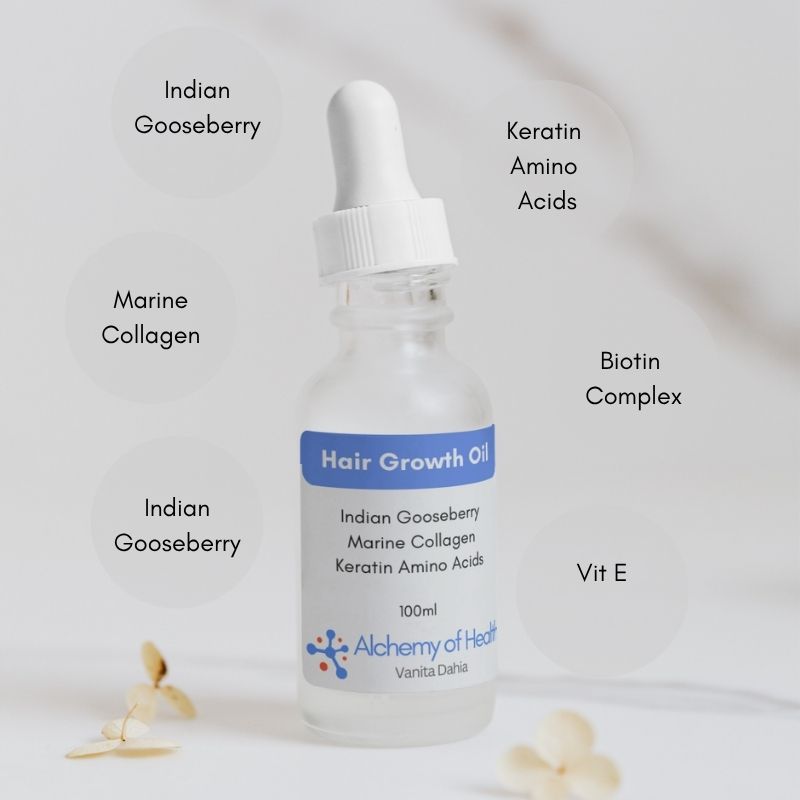
Crafted with Ayurvedic and Western herbs, our Hair Growth Oil revitalizes your scalp and hair from the inside out.
By blending antioxidant-rich Amla with Keratin and Marine Collagen, it targets the root causes of thinning. Biotin and Vitamin E-fortified Almond oil deeply hydrate while protecting each strand from external damage.
This synergistic formula transforms brittle hair into a resilient, high-shine mane with improved density. With consistent use, experience a more vibrant and nourished appearance for the ultimate hair transformation.
Hair Growth Mist
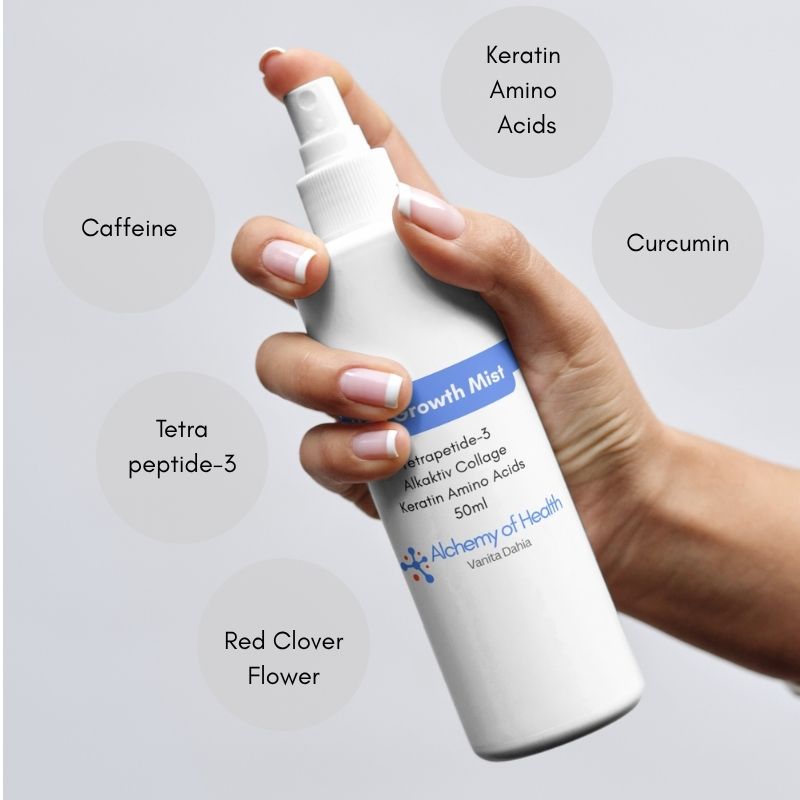
Our Hair Growth Mist is a potent leave-in treatment designed to deliver bioactive compounds directly to your follicles.
By balancing sebum and soothing inflammation, it creates the optimal scalp environment for rapid absorption.
This advanced formula revitalizes “sleepy” follicles, strengthening hair at the root to reduce breakage.
Natural botanical extracts work throughout the day to condition, thicken, and lengthen every strand.